Tuesday, April 15, 2014

Russell viper


Russell viper
Russell viper is the most deadly snake in India. It has venom of  hemolithic toxin . It's total length is 124 centimeters. It eats scorpion and mice and other small mammals.


Geographic range

Brown (1973) mentions that it can also found in Vietnam, Laos and on the Indonesian island of Sumatra. Ditmars (1937) reportedly received a specimen from Sumatra as well.However, the distribution of this species in the Indonesian archipelago is still being elucidated.


Habitat

This species is often found in highly urbanized areas and settlements in the countryside, the attraction being the rodents commensal with man. As a result, those working outside in these areas are most at risk of being bitten. It should be noted, however, that D. russelii does not associate as closely with human habitation as Naja and Bungarus (cobras and kraits).


Behavior

When threatened they form a series of S-loops, raise the first third of the body and produce a hiss that is supposedly louder than that of any other snake. When striking from this position, they can exert so much force that even a large individual can lift most of its body off the ground in the process.[5] These snakes are strong and may react violently to being picked up. The bite may be a snap, or they may hang on for many seconds.

PREY AND ENEMIES

prey

enemies
SAVE ANIMALS
—It's super-easy to help animals, no matter how old you are. Check out how Save Animals to get a jump-start on making a huge difference in the lives of animal everywhere: Animals are alive for their own reasons, not to entertain us. Animals in movies, circuses, and zoos are denied everything that is natural and important to them. They will never be allowed to hang out with their families, graze, or do anything that they would do in the wild. Refuse to support this cruelty by never going to a zoo, marine park, or circus that uses animals. If your class is planning on dissecting any animal, ask your teacher for a humane alternative assignment, such as using a computer program to perform a virtual dissection. An animal will be saved, and you will actually learn and remember way more! Check out more info on how to get a dissection alternative at your school.

— THE END

—THANK YOU


Monday, April 14, 2014

Swift


Swift
Swift is a bird who is the world's 2nd fastest animal in term of flight after cheetah and before peregrine falcon. It can flight up to 169 km/h.It eats insect and have enemies like Eurasian hobby.


Taxonomy

The taxonomy of the swifts is in general complicated, with genus and species boundaries widely disputed, especially amongst the swiftlets. Analysis of behavior and vocalizations is complicated by common parallel evolution, while analyses of different morphological traits and of various DNA sequences have yielded equivocal and partly contradictory results.


Distribution and habitat

Many have a characteristic shape, with a short forked tail and very long swept-back wings that resemble a crescent or a boomerang. The flight of some species is characterised by a distinctive "flicking" action quite different from swallows.


Behavior

Swifts as a family have smaller egg clutches and much longer and more variable incubation and fledging times than passerines with similarly sized eggs, resembling tubenoses in these developmental factors. Young birds reach a maximum weight heavier than their parents; they can cope with not being fed for long periods of time, and delay their feather growth when undernourished. Swifts and seabirds have generally secure nest sites, but their food sources are unreliable, whereas passerines are vulnerable in the nest but food is usually plentiful


PREY AND ENEMIES

prey

enemies


SAVE ANIMALS
—It's super-easy to help animals, no matter how old you are. Check out how Save Animals to get a jump-start on making a huge difference in the lives of animal everywhere: Animals are alive for their own reasons, not to entertain us. Animals in movies, circuses, and zoos are denied everything that is natural and important to them. They will never be allowed to hang out with their families, graze, or do anything that they would do in the wild. Refuse to support this cruelty by never going to a zoo, marine park, or circus that uses animals. If your class is planning on dissecting any animal, ask your teacher for a humane alternative assignment, such as using a computer program to perform a virtual dissection. An animal will be saved, and you will actually learn and remember way more! Check out more info on how to get a dissection alternative at your school.

— THE END

—THANK YOU


Saturday, April 12, 2014

Southern elephant seal


Southern elephant seal
Southern elephant seal  is the world's largest carnivore in the world . Southern elephant seal makes the largest migration of mammals. It is longer than human beings. They are aggressive fighter.


Range and population

The largest subpopulation is in the South Atlantic, with more than 400,000 individuals, including about 113,000 breeding females on South Georgia; the other breeding colonies of the Atlantic subpopulation are located on theFalkland Islands and Valdes Peninsula in Argentina (the only continental breeding population).

Feeding and diving


In the ocean, the seals apparently live alone. Most females dive in pelagic zones for foraging, while males dive in both pelagic and benthic zones. Individuals will return annually to the same hunting areas. Due to the inaccessibility of their deep-water foraging areas, no comprehensive information has been obtained about their dietary preferences, although some observation of hunting behavior and prey selection has occurred.
While hunting in the dark depths, elephant seals seem to locate their prey, at least in part, using vision; thebioluminescence of some prey animals can facilitate their capture. Elephant seals do not have a developed system of echolocation in the manner of cetaceans, but their vibrissae (facial whiskers), which are sensitive to vibrations, are assumed to play a role in search of food. When at the subantarctic or Antarctic coasts, the seals can also consume molluscs, crustaceans, nothothens.


Conservation

The reasons for this are unclear, but are thought to be related to the distribution and declining levels of the seals' primary food sources.Most of their most important breeding sites are now protected by international treaty, asUNESCO World Heritage Sites, or by national legislation.

PREY AND ENEMIES

prey

enemies


SAVE ANIMALS
—It's super-easy to help animals, no matter how old you are. Check out how Save Animals to get a jump-start on making a huge difference in the lives of animal everywhere: Animals are alive for their own reasons, not to entertain us. Animals in movies, circuses, and zoos are denied everything that is natural and important to them. They will never be allowed to hang out with their families, graze, or do anything that they would do in the wild. Refuse to support this cruelty by never going to a zoo, marine park, or circus that uses animals. If your class is planning on dissecting any animal, ask your teacher for a humane alternative assignment, such as using a computer program to perform a virtual dissection. An animal will be saved, and you will actually learn and remember way more! Check out more info on how to get a dissection alternative at your school.

— THE END

—THANK YOU


Tuesday, April 8, 2014

Viper fish


Viper fish
Viper fish lives twilight zone . It has monster like teethes . It is 30 to 60 centimeters. It is a carnivores . Science could not discovery more of this species . It is apex predator.


Diagram


Location


PREY AND ENEMIES

prey

enemies

SAVE ANIMALS
—It's super-easy to help animals, no matter how old you are. Check out how Save Animals to get a jump-start on making a huge difference in the lives of animal everywhere: Animals are alive for their own reasons, not to entertain us. Animals in movies, circuses, and zoos are denied everything that is natural and important to them. They will never be allowed to hang out with their families, graze, or do anything that they would do in the wild. Refuse to support this cruelty by never going to a zoo, marine park, or circus that uses animals. If your class is planning on dissecting any animal, ask your teacher for a humane alternative assignment, such as using a computer program to perform a virtual dissection. An animal will be saved, and you will actually learn and remember way more! Check out more info on how to get a dissection alternative at your school.

— THE END

—THANK YOU


Saturday, April 5, 2014

Liger


Liger
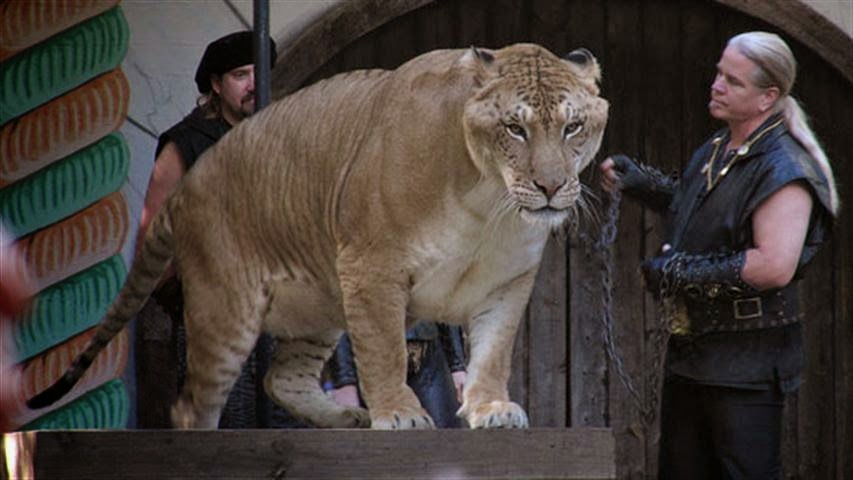
Liger is the largest big cat . It is the hybrid of lion and tiger.Tiger + lion = Liger. It weight is 900 pound . It is 3 meters long.

Size and growth

It is wrongly believed that ligers continue to grow throughout their lives due to hormonal issues.It may be that they simply grow far more during their growing years and take longer to reach their full adult size. Further growth in shoulder height and body length is not seen in ligers over 6 years old, same as both lions and tigers.


Appearance

White tigers have been crossed with lions to produce "white" (actually pale golden) ligers. In theory, white tigers could be crossed with white lions to produce white, very pale or even stripeless ligers. There are no black ligers. Very fewmelanistic tigers have ever been recorded, most being due to excessive markings (pseudo-melanism or abundism) rather than true melanism; no reports of black lions have ever been substantiated. As blue or Maltese Tigers probably no longer exist, grey or blue ligers are exceedingly improbable. It is not impossible for a liger to be white, but it is very rare.


Longevity

 A liger lived for 17 years in Bloemfontein South Africa. This liger was born in 1943 and died in 1960. South Africa still has two ligers at its one zoo at Bloemfontein.

prey 

enemies

SAVE ANIMALS
—It's super-easy to help animals, no matter how old you are. Check out how Save Animals to get a jump-start on making a huge difference in the lives of animal everywhere: Animals are alive for their own reasons, not to entertain us. Animals in movies, circuses, and zoos are denied everything that is natural and important to them. They will never be allowed to hang out with their families, graze, or do anything that they would do in the wild. Refuse to support this cruelty by never going to a zoo, marine park, or circus that uses animals. If your class is planning on dissecting any animal, ask your teacher for a humane alternative assignment, such as using a computer program to perform a virtual dissection. An animal will be saved, and you will actually learn and remember way more! Check out more info on how to get a dissection alternative at your school.

— THE END

—THANK YOU


Friday, April 4, 2014

Adelie penguin


Adelie penguin 
Adelie penguin  is refers to Antarctica penguin. They are slow on ice but extremely fast in water . It can swim 72 km/h . It eats fish and enemies like walrus and leopard seal . It can go under twilight  zone.


Taxonomy

Penguins around 38 million years ago, about 2 million years after the ancestors of the genus Aptenodytes. In turn, the Adélie penguins split off from the other members of the genus around 19 million years ago.


Behavior

“The great trouble with [the dog teams] has been due to the fatuous conduct of the penguins. Groups of these have been constantly leaping onto our [ice] floe. From the moment of landing on their feet their whole attitude expressed devouring curiosity and a pig-headed disregard for their own safety. They waddle forward, poking their heads to and fro in their usually absurd way, in spite of a string of howling dogs straining to get at them. 


Diet

The Adélie penguin is known to feed mainly on Antarctic krill, ice krill, Antarctic silverfish, Sea Krill and Glacial Squid (diet varies depending on geographic location) during the chick-rearing season.

PREY AND ENEMIES

prey

enemies

SAVE ANIMALS
—It's super-easy to help animals, no matter how old you are. Check out how Save Animals to get a jump-start on making a huge difference in the lives of animal everywhere: Animals are alive for their own reasons, not to entertain us. Animals in movies, circuses, and zoos are denied everything that is natural and important to them. They will never be allowed to hang out with their families, graze, or do anything that they would do in the wild. Refuse to support this cruelty by never going to a zoo, marine park, or circus that uses animals. If your class is planning on dissecting any animal, ask your teacher for a humane alternative assignment, such as using a computer program to perform a virtual dissection. An animal will be saved, and you will actually learn and remember way more! Check out more info on how to get a dissection alternative at your school.

— THE END

—THANK YOU


Thursday, April 3, 2014

Reticulated python


Reticulated python 
Reticulated python is the world's longest snake. It can grow 10 meters long. Its longer than Green anaconda. It found in east Asia.

Taxonomy


The latter two are dwarf subspecies. Apparently, the population of the Sangihe Islands north of Sulawesi represents another such subspecies which is basal to the P. r. reticulatus plus P. r. jampeanus clade, but it is not yet formally described.
The proposed subspecies dalegibbonsi, euanedwardsi, haydnmacphiei, neilsonnemani, patrickcouperi andstuartbigmoresubs pecies.

Geographic range

Three subspecies have been proposed, but are not recognised in the Integrated Taxonomic Information System (ITIS). The color and size can vary a great deal among the subspecies described. Geographical location is a good key to establishing the subspecies, as each one has a distinct geographical range.


Feeding

Their natural diet includes mammals and occasionally birds. Small specimens up to 3–4 m (10–14 ft) long eat mainly rodents such as rats, whereas larger individuals switch to prey such as Viverridae (e.g. civets and binturongs), and even primates and pigs. 

PREY AND ENEMIES

prey

enemies

SAVE ANIMALS
—It's super-easy to help animals, no matter how old you are. Check out how Save Animals to get a jump-start on making a huge difference in the lives of animal everywhere: Animals are alive for their own reasons, not to entertain us. Animals in movies, circuses, and zoos are denied everything that is natural and important to them. They will never be allowed to hang out with their families, graze, or do anything that they would do in the wild. Refuse to support this cruelty by never going to a zoo, marine park, or circus that uses animals. If your class is planning on dissecting any animal, ask your teacher for a humane alternative assignment, such as using a computer program to perform a virtual dissection. An animal will be saved, and you will actually learn and remember way more! Check out more info on how to get a dissection alternative at your school.

— THE END

—THANK YOU